
Unauthored
EBB
RHYTHM
GRAIN
WEATHERING
Unauthored
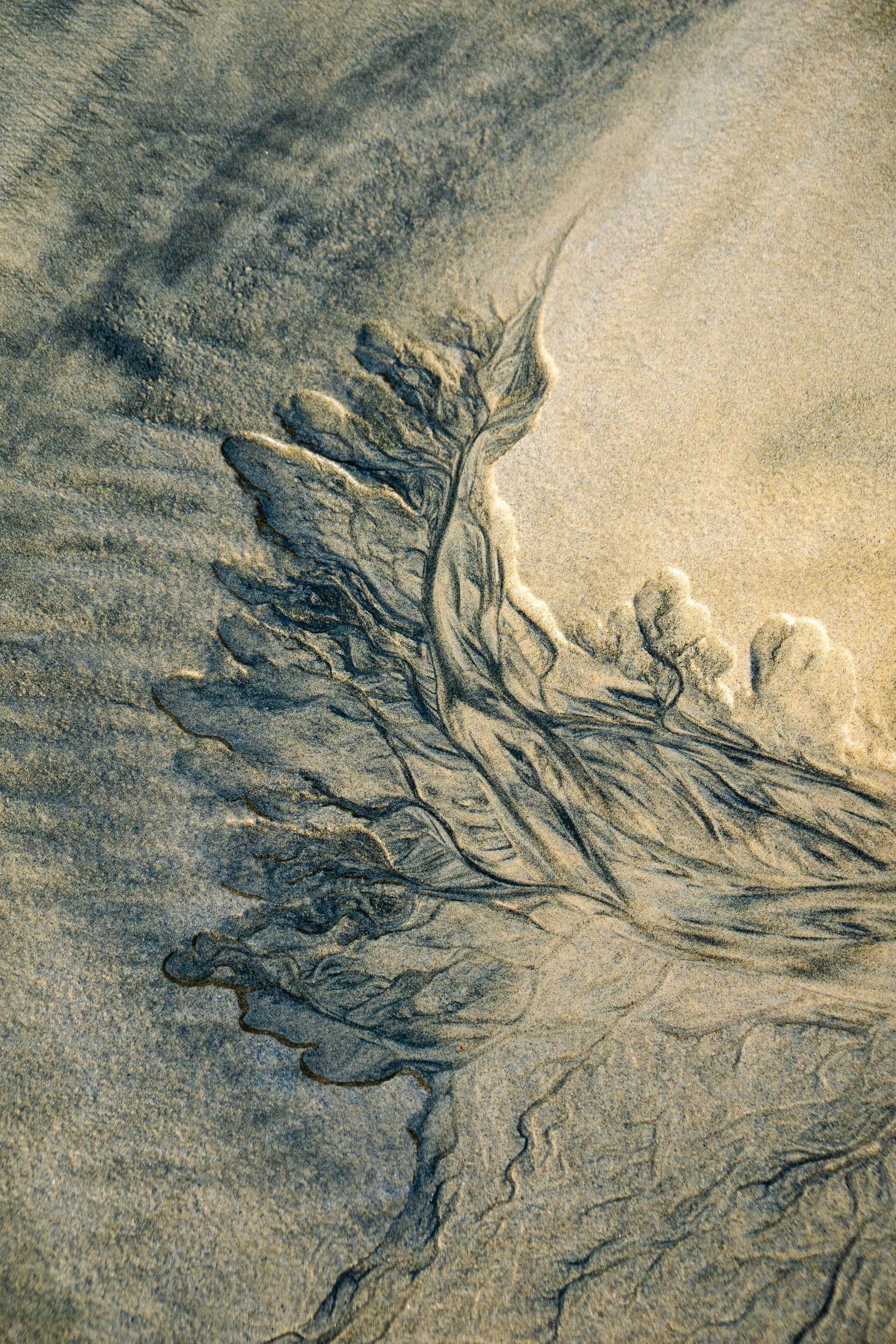
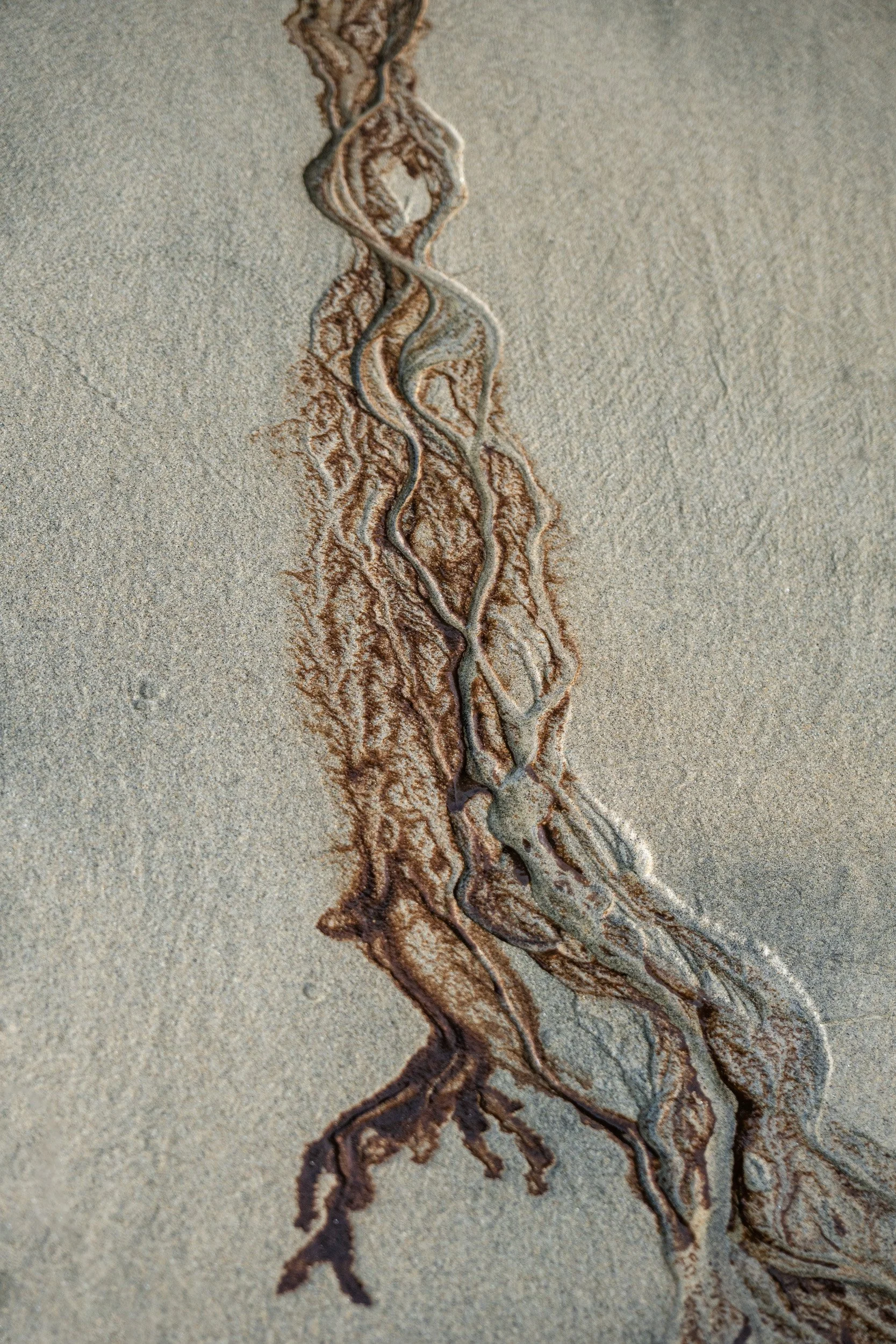
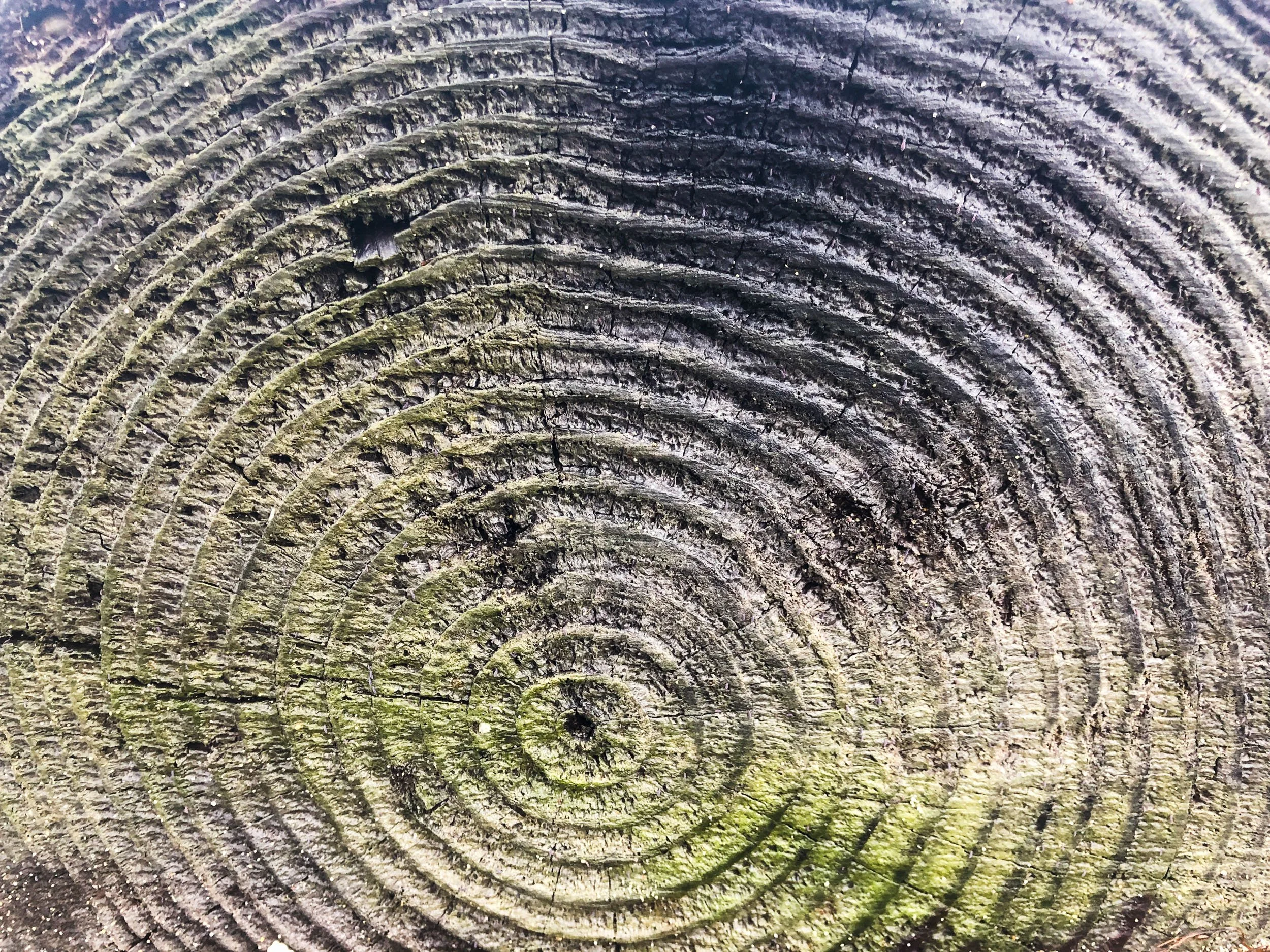
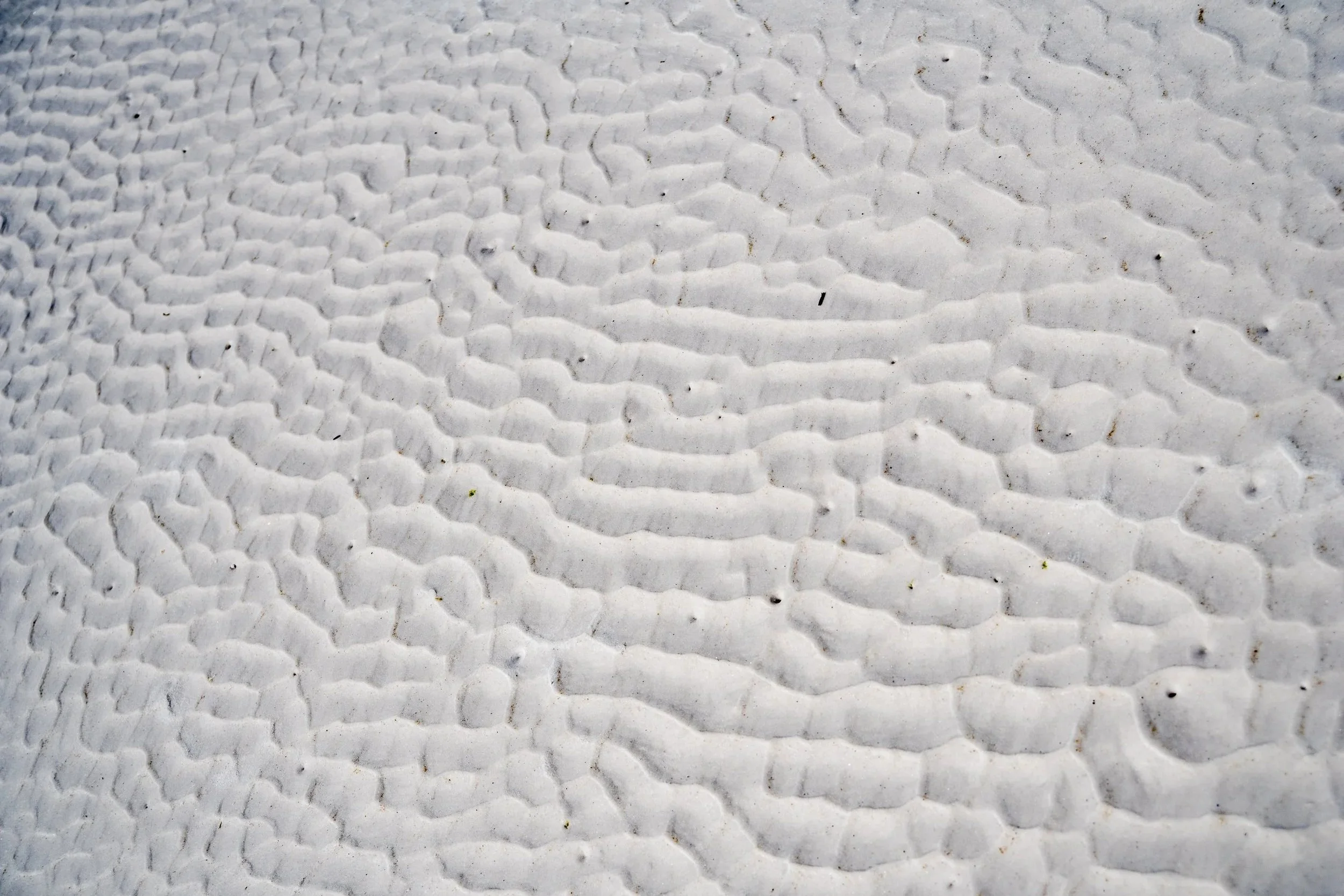
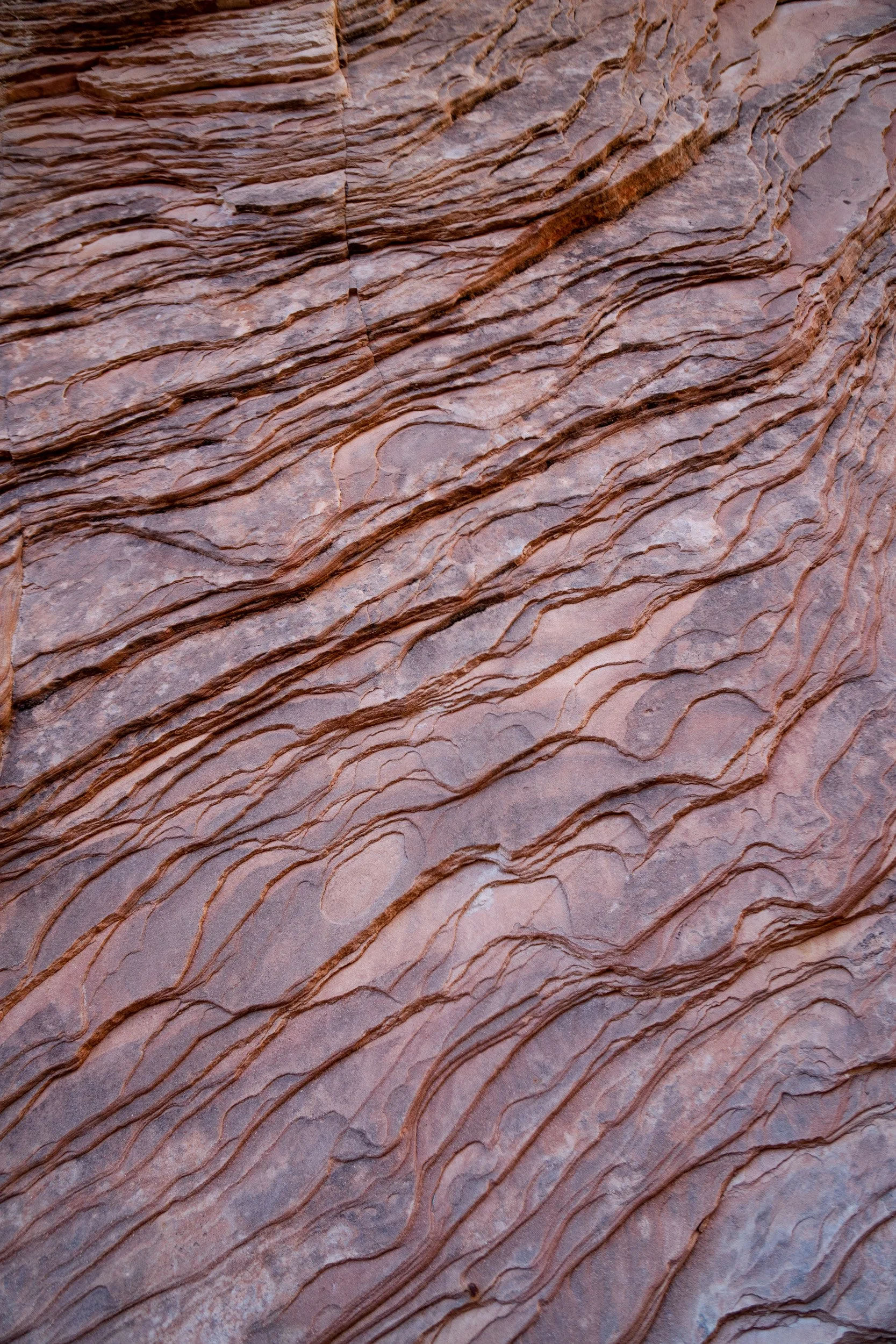
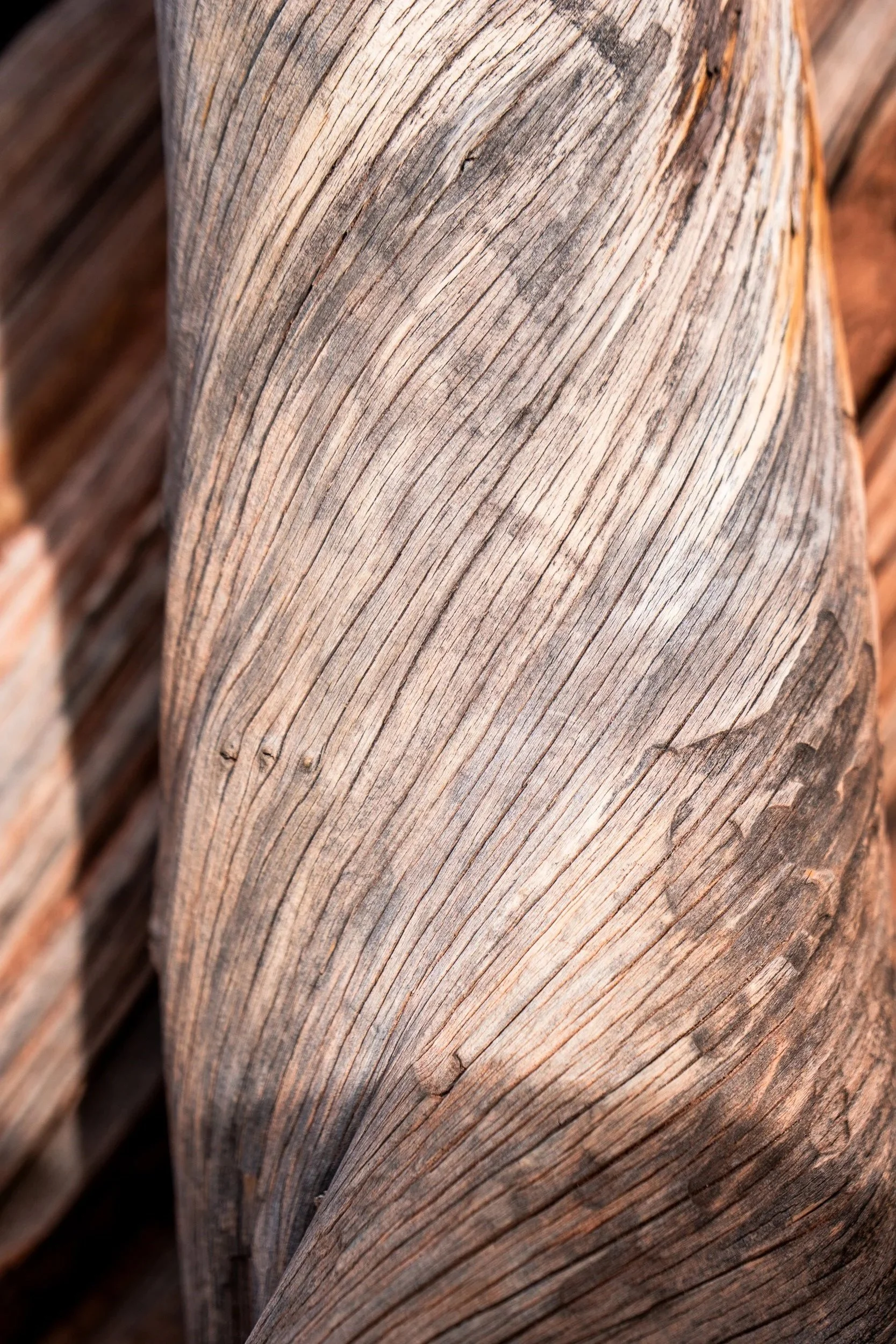
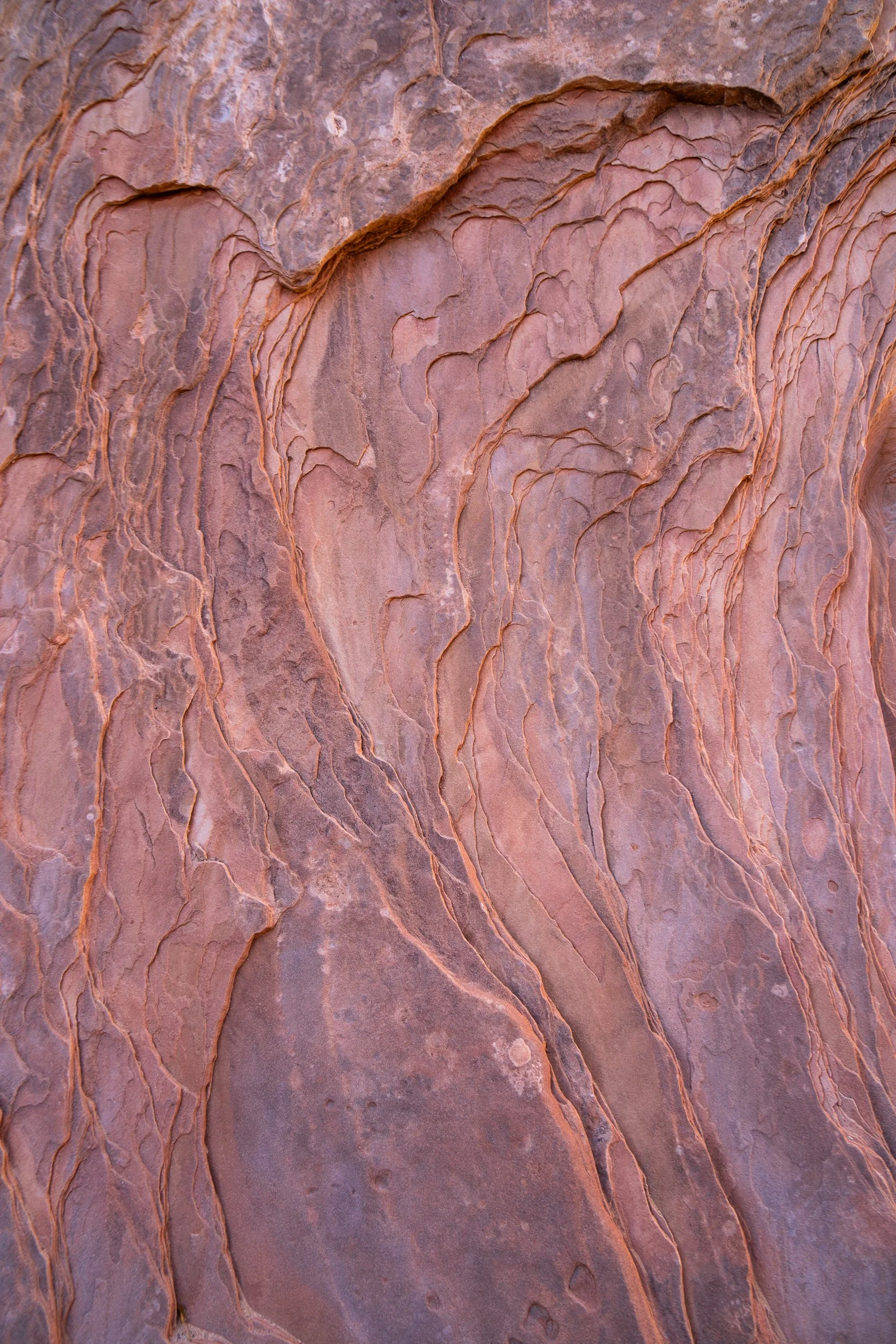
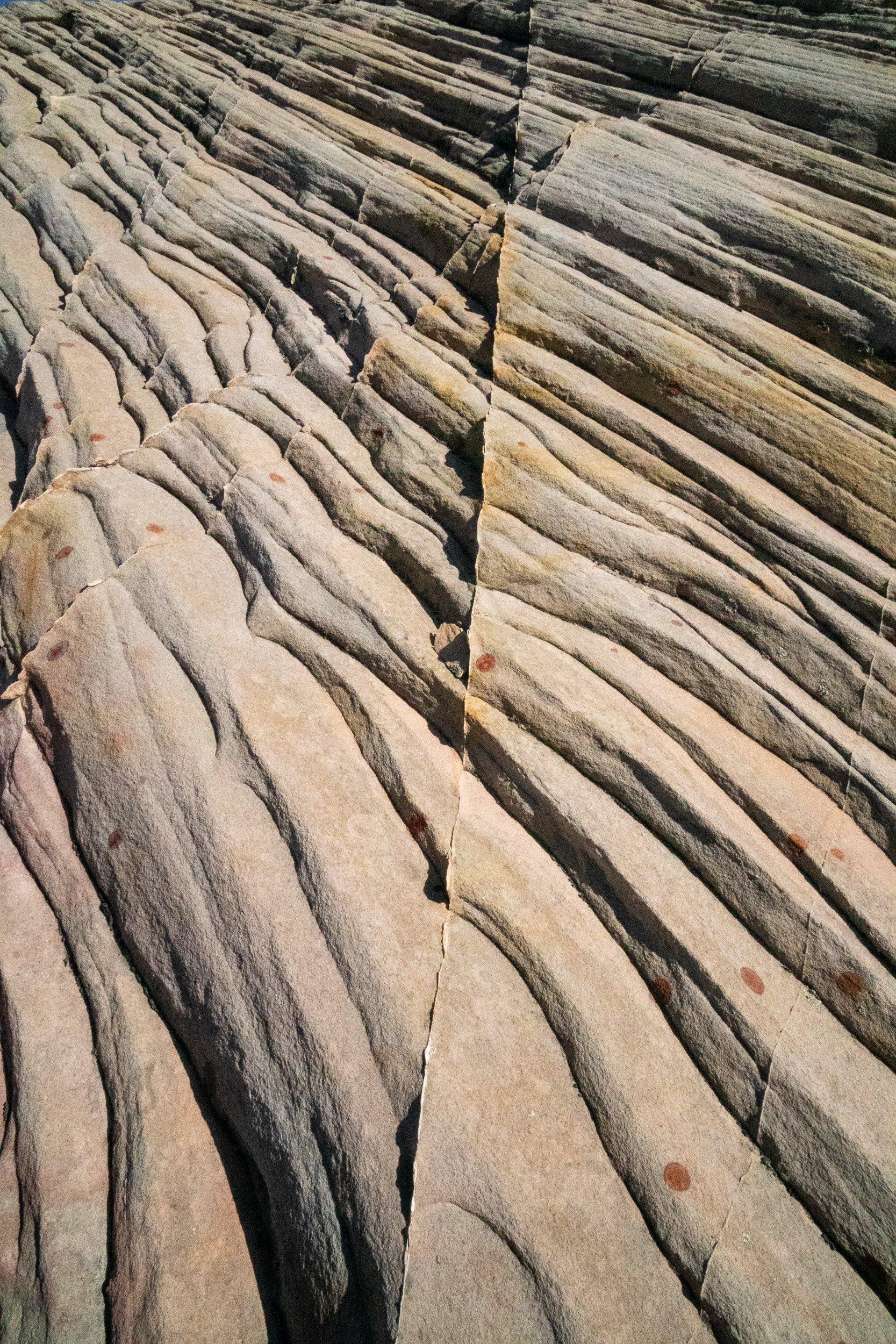
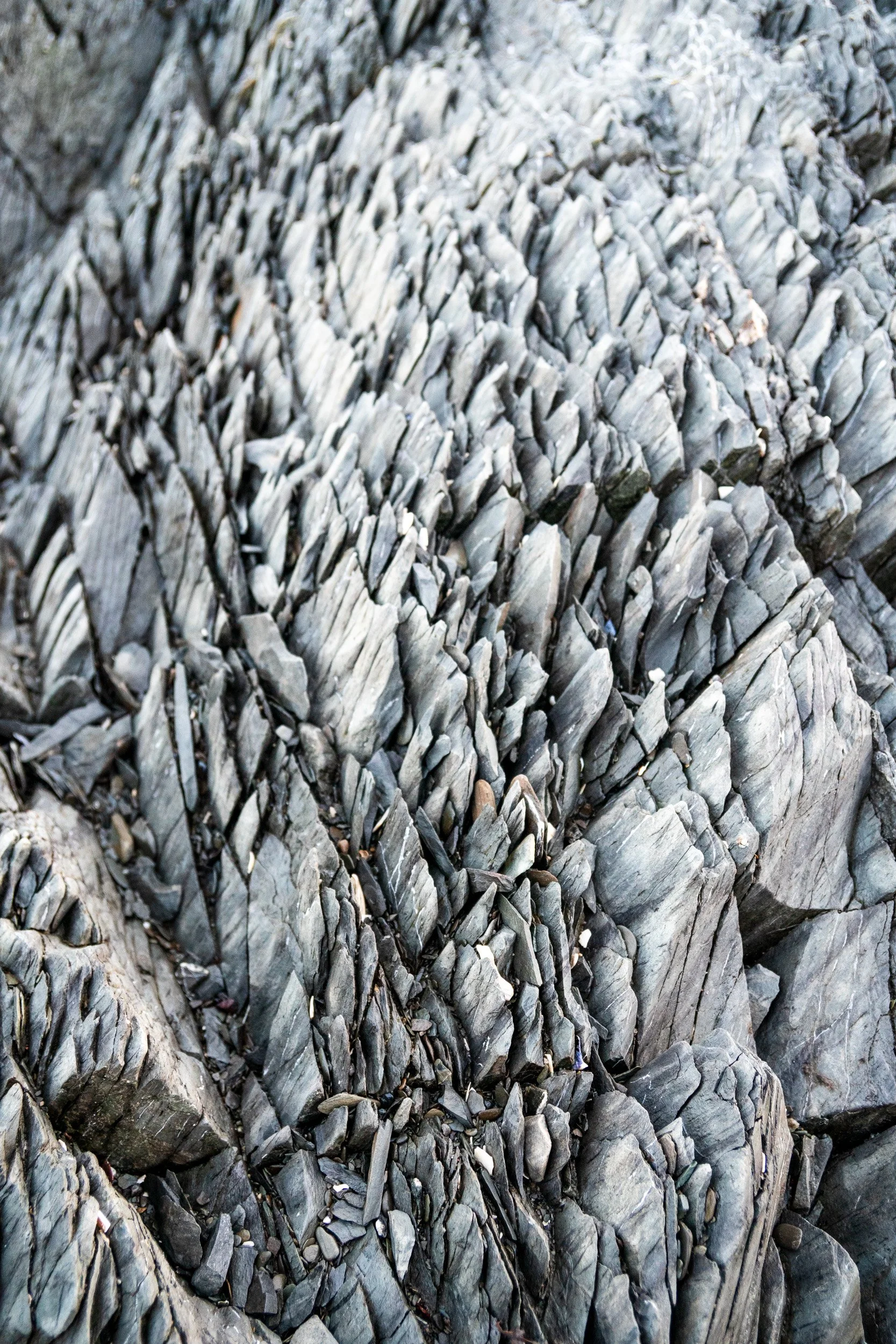
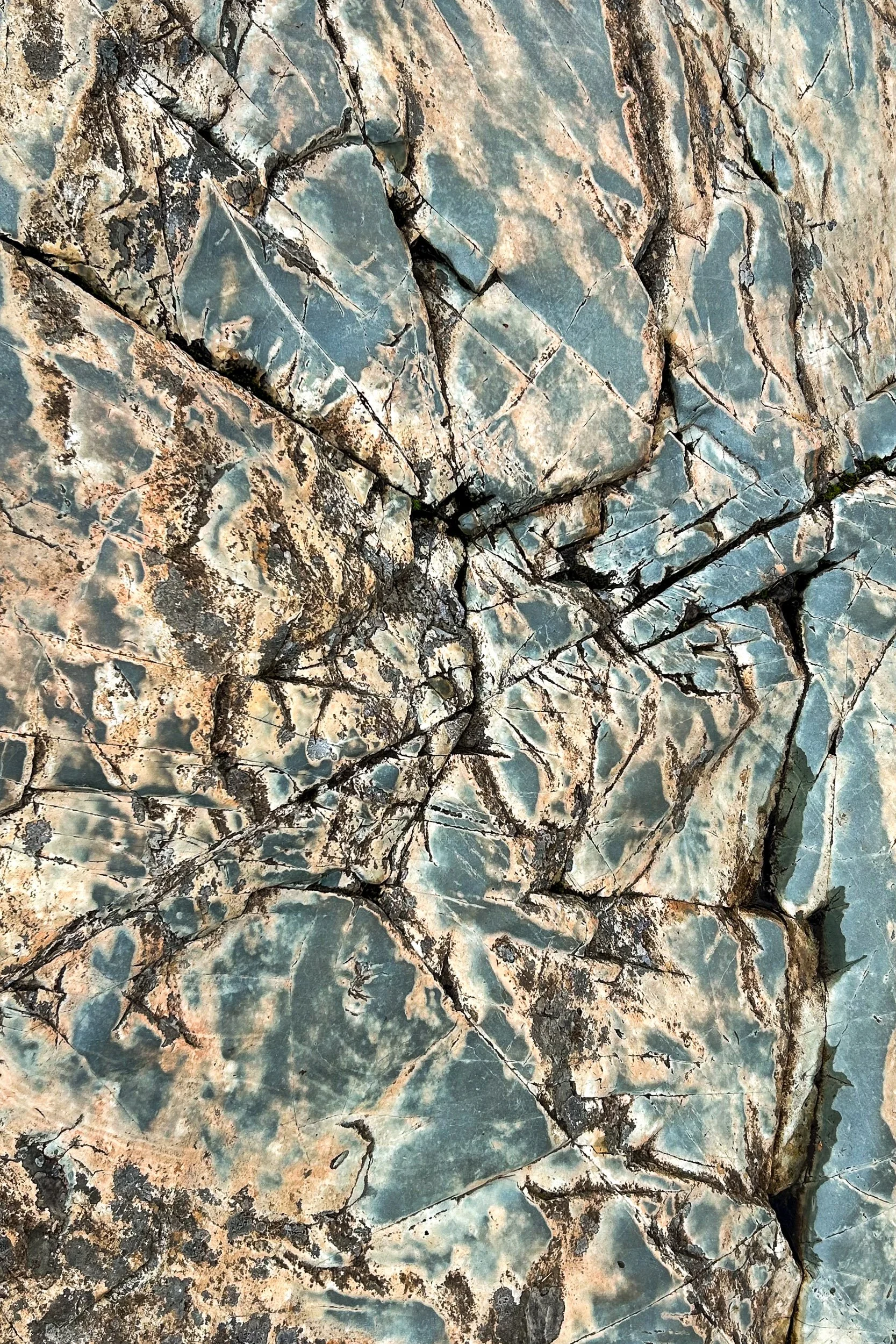
A receding tide draws a forest into the sand in less than an hour. A tree adds one ring a year and, long after it dies, weathers until its grain stands out in ridges and swirls. Sandstone holds the same lines, laid down by wind and water and turned to stone over millions of years. Loose sand is where sandstone begins.
I photograph these surfaces up close, so that scale, place and material fall away and only the mark remains. The images come from Canada, the United States, Argentina, Australia and New Zealand, but they are not about where. They are about how: water, wind, growth and decay, working at speeds millions of years apart, arriving at the same forms. Stone that reads as wood. Tree rings that echo the layers of sandstone. Water draining through sand, drawing patterns that branch like roots and trees.
No one made these marks, yet they are not random. They are what each material allows: sand yielding to water, grain giving way to weather, soft layers wearing away before hard ones. Unplanned, but not arbitrary .
For most of art's history, intention was the starting point of a work. In the early twentieth century, some artists tried to break away from it and let chance take over: le hasard. In 3 Standard Stoppages (1913–14), Duchamp dropped lengths of thread and kept the curves they fell into; Arp arranged torn paper "according to the laws of chance." Each needed a procedure to escape his own hand. Stone and sand never had a hand to escape.
Side by side, it can be hard to tell which surface took an afternoon and which took an age.